
Process 1
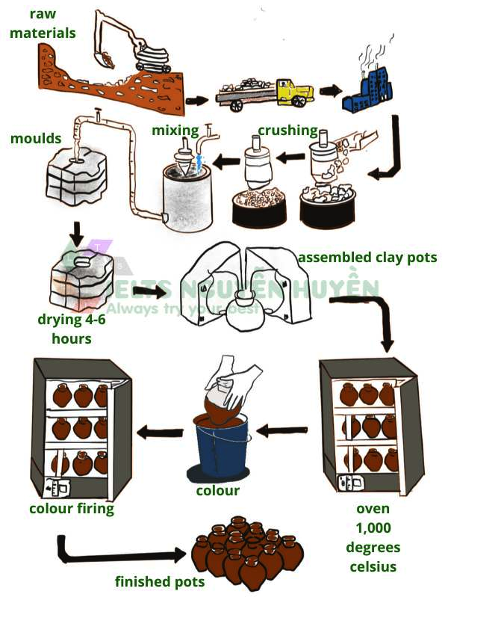
The diagram below shows one method of manufacturing ceramic pots.
Summarize the information by selecting and reporting the main features, and make comparisons where relevant.
Write at least 150 words.
Process 2
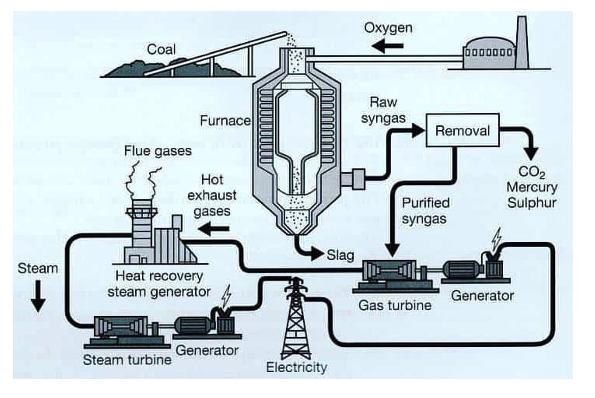
The diagram below shows the process of electricity production.
Summarize the information by selecting and reporting the main features, and make comparisons where relevant.
Write at least 150 words.
Process 3
The diagram below shows how orange juice is produced
Summarize the information by selecting and reporting the main features, and make comparisons where relevant.
Write at least 150 words.

Process 4
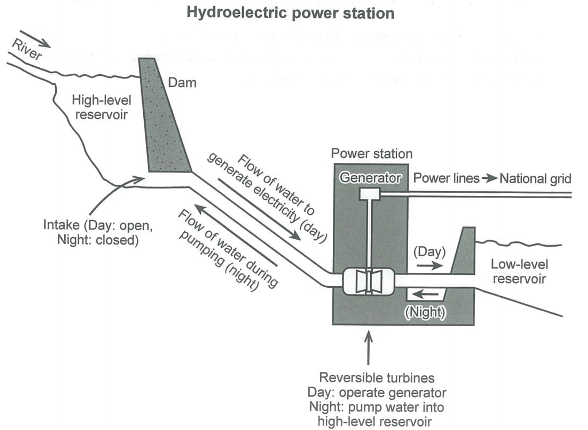
The diagram below shows how electricity is generated in a hydroelectric power station.
Summarize the information by selecting and reporting the main features, and make comparisons where relevant.
Write at least 150 words
Process 5
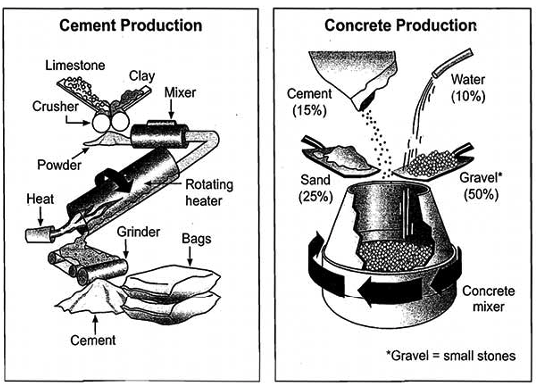
The diagrams below show the stages and equipment used in the cement-making process, and how cement is used to produce concrete for building purposes.
Summarize the information by selecting and reporting the main features, and make comparisons where relevant.
Write at least 150 words
Process 6
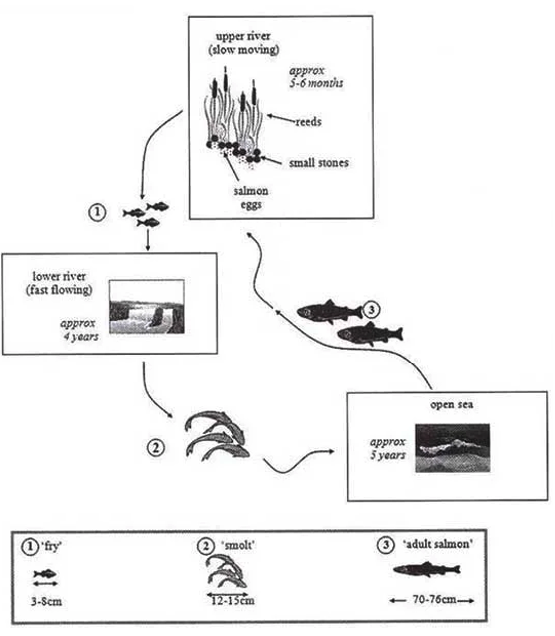
The diagrams below show the life cycle of a species of large fish called the salmon.
Summarize the information by selecting and reporting the main features, and make comparisons where relevant.
Write at least 150 words
Process 7
The diagram below shos hoe geothermal energy is used to produce electricity.
Summarize the information by selecting and reporting the main features, and make comparisons where relevant.
Write at least 150 words

Process 9
The diagram below shows the process for recycling plastic bottles
Summarize the information by selecting and reporting the main features, and make comparisons where relevant.
Write at least 150 words

Process 10
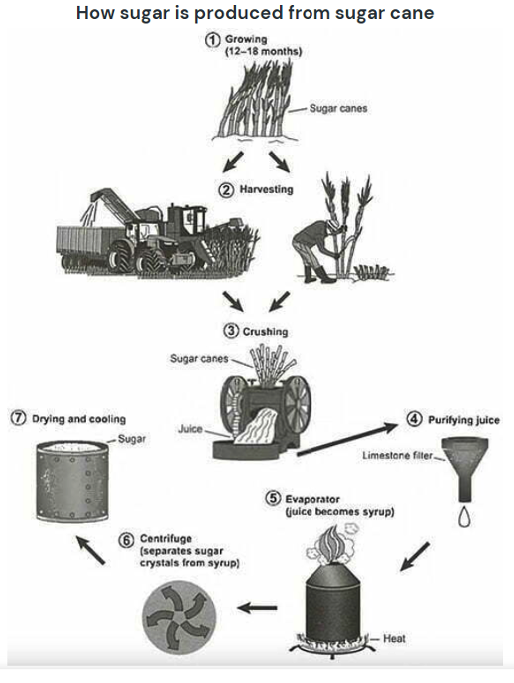
The diagram below shows the manufacturing process for making sugar from sugar cane.
Summarize the information by selecting and reporting the main features, and make comparisons where relevant.
Write at least 150 words
Process 11
The diagrams below show the life cycle of the silkworm and the stages in the production of silk cloth.
Summarize the information by selecting and reporting the main features, and make comparisons where relevant.
Write at least 150 words

Process 12
The diagram below shows how instant noodles are manufactured
Summarize the information by selecting and reporting the main features, and make comparisons where relevant.
Write at least 150 words

Process 13
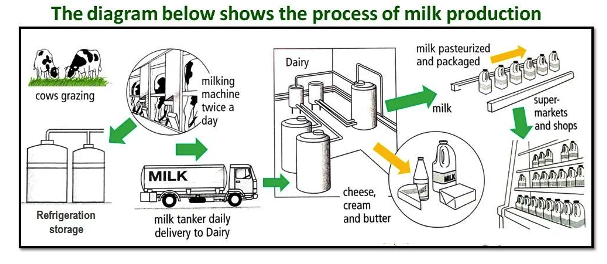
The diagram shows the process by which milk and related products are produced
Summarize the information by selecting and reporting the main features, and make comparisons where relevant.
Write at least 150 words
Process 14
The diagram shows the process by which sheep embryos are cloned.
Summarize the information by selecting and reporting the main features, and make comparisons where relevant.
Write at least 150 words
Process 15
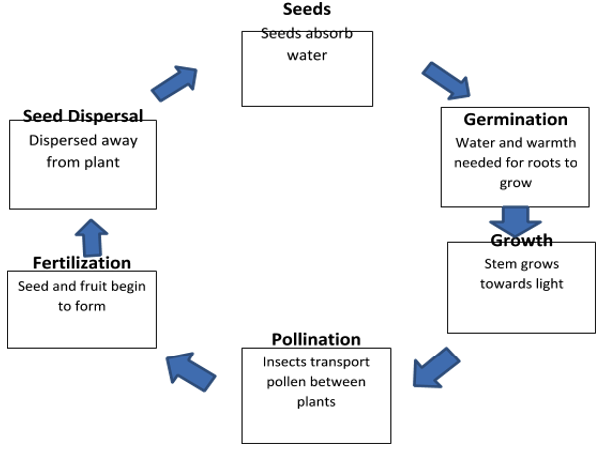
The diagram shows the the life cycle of flowering plants
Summarize the information by selecting and reporting the main features, and make comparisons where relevant.
Write at least 150 words

Process 16
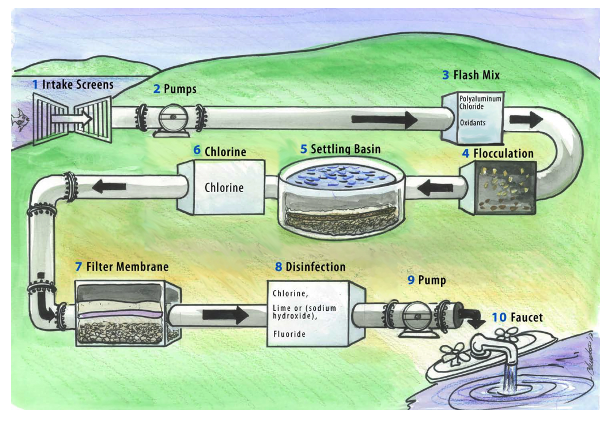
The diagram shows the process of the water treatment.
Summarize the information by selecting and reporting the main features, and make comparisons where relevant.
Write at least 150 words
Process 17
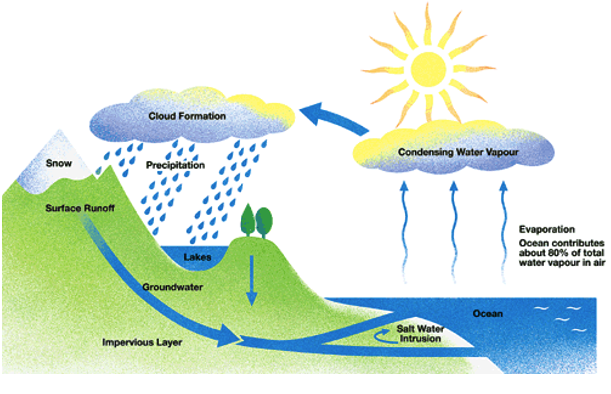
The diagram below shows the water cycle, which is the continuous movement of water on, above and below the surface of the Earth.
Summarize the information by selecting and reporting the main features, and make comparisons where relevant.
Write at least 150 words
Process 18
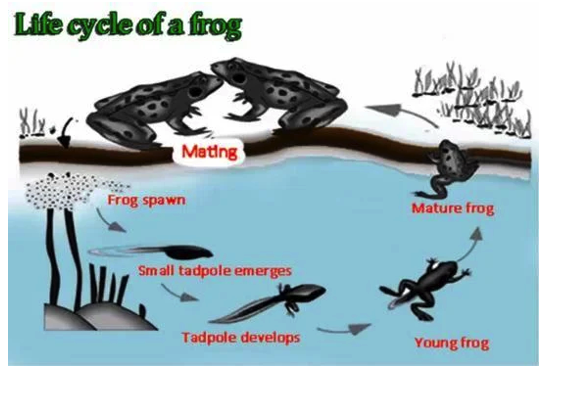
The diagram shows the the life cycle of a frog.
Summarize the information by selecting and reporting the main features, and make comparisons where relevant.
Write at least 150 words
Process 19
The diagram shows the process by which electricity is generated in two types of hydroelectric power station.
Summarize the information by selecting and reporting the main features, and make comparisons where relevant.
Write at least 150 words
Process 20
The diagram illustrates how steel rods are manufactured in the furniture industry.
Summarize the information by selecting and reporting the main features, and make comparisons where relevant.
Write at least 150 words

Process 21
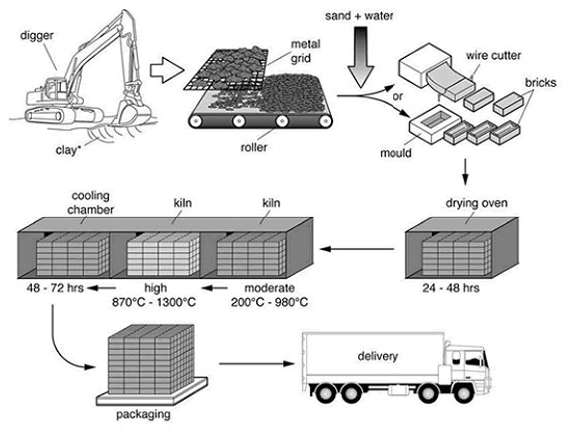
The diagram illustrates the process that is used to manufacture bricks for the building industry.
Summarise the information by selecting and reporting the main features and make comparisons where relevant.
Write at least 150 words.

Process 22
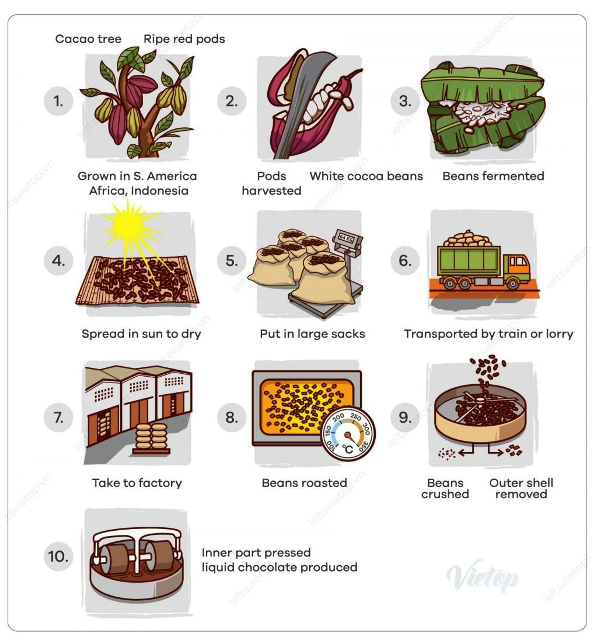
The process diagram details the steps by which liquid chocolcate is produced from cocoa beans.
Summarise the information by selecting and reporting the main features and make comparisons where relevant.
Write at least 150 words.
Process 23
The diagram below shows how etanol fuel is produced from corn
Summarise the information by selecting and reporting the main features and make comparisons where relevant.
Write at least 150 words.
Process 24
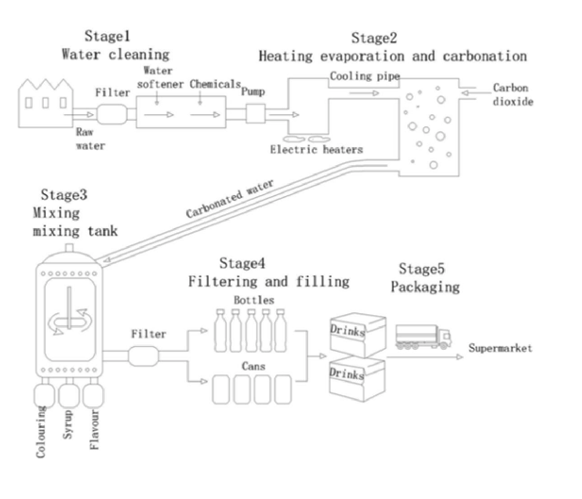
The diagram below shows how carbonated drink is made
Summarise the information by selecting and reporting the main features and make comparisons where relevant.
Write at least 150 words.
Process 25
The diagram details the process of making wool.
Summarise the information by selecting and reporting the main features and make comparisons where relevant.
Write at least 150 words

Process 26
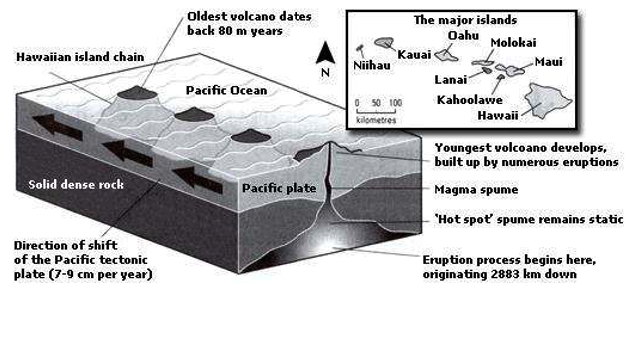
The diagram below gives the information about the Hawaiian island chain in the centre of the Pacific Ocean.
Summarise the information by selecting and reporting the main features and make comparisons where relevant.
Write at least 150 words
Sample Answer Band 9 - 1
The diagrams below show some principles of house design for cool and for warm climates.
Write a report for a university lecturer describing the information shown below. Make comparisons where relevant.
You should write at least 150 words.
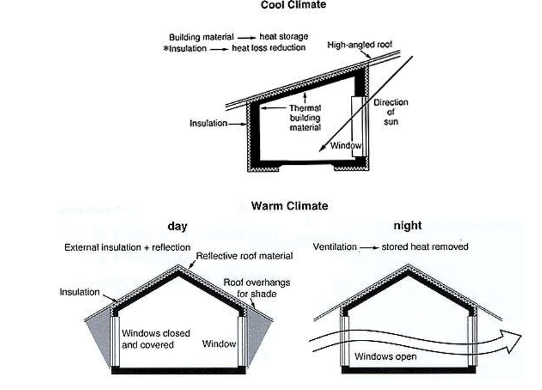
The diagrams show how house designs differ according to climate.
The most noticeable difference between houses designed for cool and warm climates is in the shape of the roof. The designs also differ with regard to the windows and the use of insulation.
We can see that the cool climate house has a high-angled roof, which allows sunlight to enter through the window. By contrast, the roof of the warm climate house has a peak in the middle and roof overhangs to shade the windows. Insulation and thermal building materials are used in cool climates to reduce heat loss, whereas insulation and reflective materials are used to keep the heat out in warm climates.
Finally, the cool climate house has one window which faces the direction of the sun, while the warm climate house has windows on two sides which are shaded from the sun. By opening the two windows at night, the house designed for warm climates can be ventilated.
(162 words)
Sample Answer Band 9 - 2
The diagram shows the life cycle of the honey bee.
Write a report for a university lecturer describing the information shown below. Make comparisons where relevant.
You should write at least 150 words.
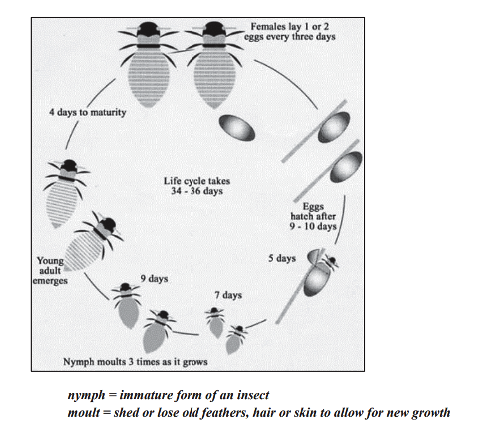
The diagram illustrates the various stages in the life of a honey bee. We can see that the complete life cycle lasts between 34 and 36 days. It is also noticeable that there are five main stages in the development of the honey bee, from egg to mature adult insect.
The life cycle of the honey bee begins when the female adult lays an egg; the female typically lays one or two eggs every 3 days. Between 9 and 10 days later, each egg hatches and the immature insect, or nymph, appears.
During the third stage of the life cycle, the nymph grows in size and sheds its skin three times. This moulting first takes place 5 days after the egg hatches, then 7 days later, and again another 9 days later. After a total of 30 to 31 days from the start of the cycle, the young adult honey bee emerges from its final moulting stage, and in the space of only 4 days it reaches full maturity.
(169 words)
Sample Answer Band 9 - 3
The chart below shows the process of waste paper recycling.
Write a report for a university lecturer describing the information shown below. Make comparisons where relevant.
You should write at least 150 words.
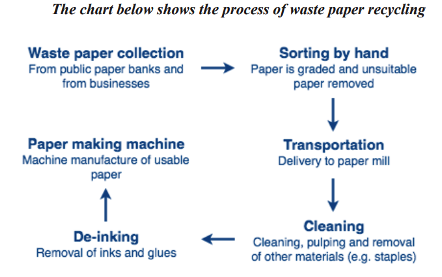
The flow chart shows how waste paper is recycled. It is clear that there are six distinct stages in this process, from the initial collection of waste paper to the eventual production of usable paper.
At the first stage in the paper recycling process, waste paper is collected either from paper banks, where members of the public leave their used paper, or directly from businesses. This paper is then sorted by hand and separated according to its grade, with any paper that is not suitable for recycling being removed. Next, the graded paper is transported to a paper mill.
Stages four and five of the process both involve cleaning. The paper is cleaned and pulped, and foreign objects such as staples are taken out. Following this, all remnants of ink and glue are removed from the paper at the de-inking stage. Finally, the pulp can be processed in a paper making machine, which makes the end product: usable paper.
(160 words)
Sample Answer Band 9 - 4
The diagram below shows how solar panels can be used to provide electricity for domestic use.
Write a report for a university lecturer describing the information shown below. Make comparisons where relevant.
You should write at least 150 words.
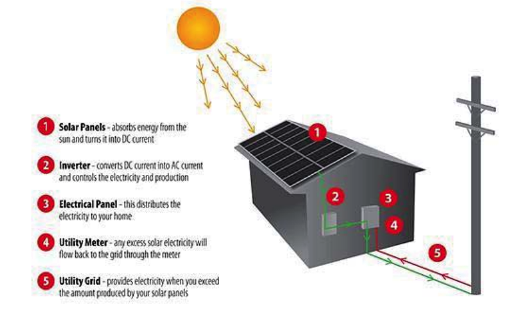
The picture illustrates the process of producing electricity in a home using solar panels.
It is clear that there are five distinct stages in this process, beginning with the capture of energy from sunlight. The final two steps show how domestic electricity is connected to the external power supply.
At the first stage in the process, solar panels on the roof of a normal house take energy from the sun and convert it into DC current. Next, this current is passed to an inverter, which changes it to AC current and regulates the supply of electricity. At stage three, electricity is supplied to the home from an electrical panel.
At the fourth step shown on the diagram, a utility meter in the home is responsible for sending any extra electric power outside the house into the grid. Finally, if the solar panels do not provide enough energy for the household, electricity will flow from the utility grid into the home through the meter.
(163 words)
Sample Answer Band 9 - 5
The diagrams below show how houses can be protected in areas which are prone to flooding.
Write a report for a university lecturer describing the information shown below. Make comparisons where relevant.
You should write at least 150 words.
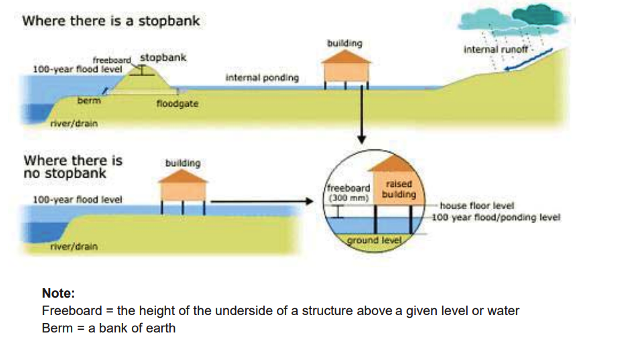
The diagrams compare two different methods of defence for homes which are at risk of being flooded.
The key difference between the diagrams is that they show flood protection with and without a stopbank. In either case, the at-risk home is raised on stilts above ground level.
The first diagram shows how a stopbank acts as a flood barrier to stop river water from flooding homes. The stopbank is a small mound of land next to the river that is higher than the 100-year flood level, and prevents the river from bursting its banks.
Nearby houses can be built on stilts to prevent flooding from rainwater, and a floodgate beneath the stopbank can be opened to allow this ‘ponding’ to drain off into the river.
When there is no stopbank, as shown in the second diagram, there will be nothing to stop the river from flooding. In this case, the solution is to put buildings on stilts. The height of the stilts is measured so that the floor of the house is 300mm above the 100-year flood level. This measurement is called the ‘freeboard’.
(184 words)
Sample Answer Band 9 - 6
The illustrations show how chocolate is produced.
Write a report for a university lecturer describing the information shown below. Make comparisons where relevant.
You should write at least 150 words.
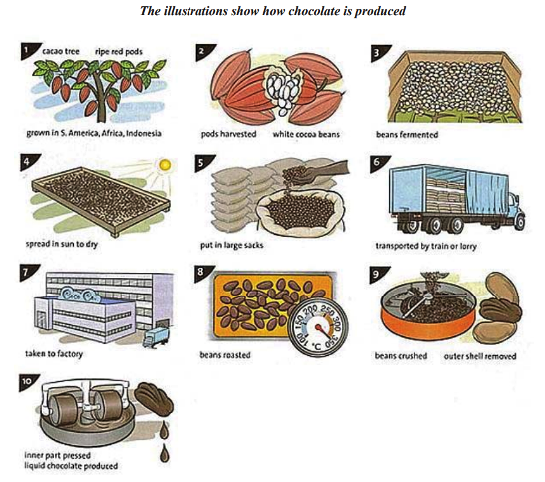
The diagram explains the process for the making of chocolate. There are a total of ten stages in the process, beginning with the growing of the pods on the cacao trees and culminating in the production of the chocolate.
To begin, the cocoa comes from the cacao tree, which is grown in the South American and African continents and the country of Indonesia. Once the pods are ripe and red, they are harvested and the white cocoa beans are removed. Following a period of fermentation, they are then laid out on a large tray so they can dry under the sun. Next, they are placed into large sacks and delivered to the factory. They are then roasted at a temperature of 350 degrees, after which the beans are crushed and separated from their outer shell. In the final stage, this inner part that is left is pressed and the chocolate is produced.
(152 Words)
Sample Answer Band 9 - 7
The process shows how plants create food.
Write a report for a university lecturer describing the information shown below. Make comparisons where relevant.
You should write at least 150 words
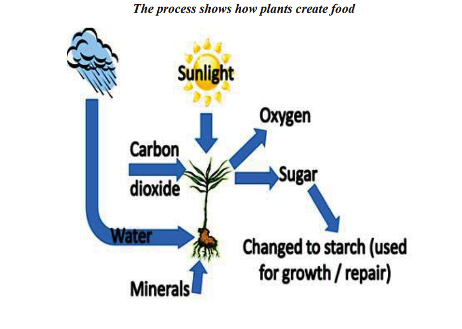
The illustration shows the process by which plants are able to produce food.
Plants require input from four different sources to produce the sugars that are needed. First, the roots absorb water. Added to this, the plant is able to convert sunlight into energy needed for the process to be able to take place. Additionally, carbon dioxide is taken from the atmosphere through the leaves. Finally come the minerals which are extracted from the soil through the roots.
When combined, these four factors allow the plant to produce sugar, which is then converted into starch and stored in the leaves and the stem until required, when it is used for growth and repair of damaged leaves, stems or roots. A byproduct of this process is the conversion of carbon dioxide to oxygen, which is released into the air.
Overall, the process requires four elements to function, and in turn produces two different effects.
(154 words)
Sample Answer Band 9 - 8
The diagram shows the parts of a coffee maker.
Write a report for a university lecturer describing the information shown below. Make comparisons where relevant.
You should write at least 150 words
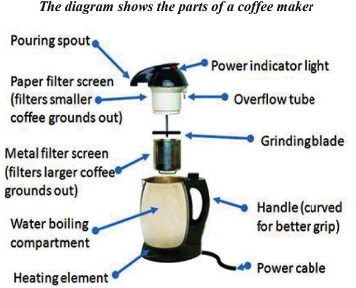
The diagram is of a machine used to make coffee from coffee beans and can be divided into three main sections – the top unit, the middle and the bottom.
Starting at the top, the machine has a light to indicate the power. On the other side of this red light is an angled section used for pouring. On the right hand side below the power light is a tube that is used to remove any overflow from the process. The lower section of this part of the device has a filter made of paper that is used to ensure smaller coffee grounds are separated.
The middle section has a metal filter which is used to remove larger coffee granules. On the diagram, there is a large, horizontal blade used for grinding.
The lower part of the machine has an oval shaped section for the water which is heated by an element at the bottom of the whole device. On the right hand side is a handle which has been ergonomically designed. Finally, there is a power cable protruding from the bottom right.
(182 words)
Sample Answer Band 9 - 9
The process shows diamonds moving from the mine to the retailer.
Write a report for a university lecturer describing the information shown below. Make comparisons where relevant.
You should write at least 150 words
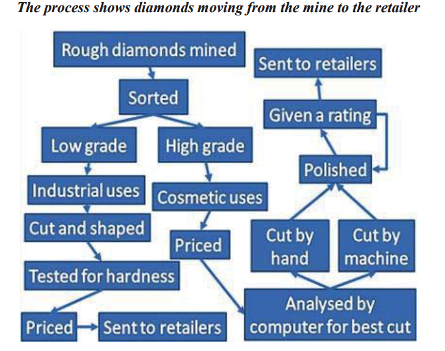
The flowchart illustrates the steps in the process of getting diamonds from a mine to the those who are selling them.
The process begins with the stones being mined in their rough form, following which they are sorted into two different grades, namely high grade and low grade.
The low grade diamonds are set aside for industrial purposes, after which they are cut and shaped, then assessed for their level of hardness. The final step before being sent to the retailers is the pricing.
High grade diamonds have a number of additional processes. Earmarked for cosmetic applications, they are priced then submitted to a digital analysis to ensure the most effective cut. They are then sent to be cut using a machine, or cut by hand, before they are then polished. At this point they are rated, and dependent on that rating are either returned for further polishing or, as with the industrial use diamonds, sent to the retailers.
This ends the description of the process.
(166 words)